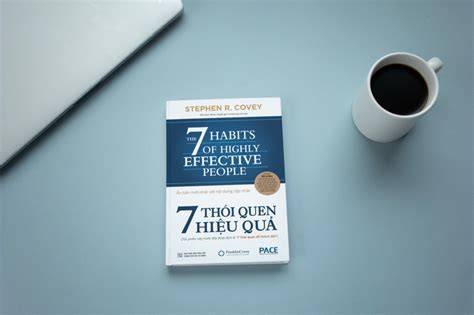
Do you know the book The 7 Habits of Highly Effective People by Stephen R. Covey? It’s almost like a “bedside book” for anyone who wants to develop themselves. Covey points out that lasting success doesn’t come from luck, but from cultivating the right habits.
With this habit, not everyone can use it correctly right from the start. It’s a process of refinement to turn it into a sharp tool that fits each individual. As for me, after consistently applying it, I truly achieved what I wanted with Habit 2: Begin with the End in Mind.
Simply put, this habit advises us: before doing anything, visualize the final outcome you want to achieve, then work backward to make a plan. It sounds simple, but when applied, it completely changes the way you work.
And I am a living example of this, applying Habit 2 to a very… nerve-wracking experience: participating in an MC competition.
Being clear about your ultimate goal.
The first thing I told myself was: “If not the champion, then the runner-up.” Ambitious, right? Especially for a newbie like me – I had never been on a big stage, only practicing in front of a mirror and recording myself to adjust my voice and gestures. Around me were all professionals, many of whom had already done numerous shows.
But it was that clear goal that erased my uncertainty. I visualized the final outcome: standing on the stage, lights shining, audience applauding, the scoreboard appearing, and me being the champion or runner-up.
Then I asked myself: “What do I need to do to win?” Not just practicing my voice, but also learning how to present, use gestures, eye contact, rhythm, and interact with the audience. Thanks to that, I could clearly see the path I needed to take instead of aimlessly practicing just for the sake of it.
Scoring rubric: A compass for planning.
One factor I quickly realized was: to score high, you have to understand the grading criteria.
The competition rubric had 4 criteria:
Creativity: an impressive opening, a story with highlights.
Presentation style: gestures, eye contact, rhythm, and confidence.
Polish: attire, script, and detailed preparation.
Audience interaction: responding flexibly and maintaining the stage flow.
Once I understood the rubric, everything became clearer. Instead of “practicing to sound good,” I practiced to meet each specific criterion.
Polish: the area where I put the most effort.
If anyone asked me where I invested the most effort, the answer would definitely be polish. I didn’t want to just dress nicely; I prepared everything myself: from the invitation card, presentation slides, to the music. I practiced repeatedly to sync with the music, allowing no small mistakes. I even added illustrative videos, and sometimes used effects like dimming the lights to guide the audience’s emotions.
I meticulously controlled every small detail so that the overall presentation looked smooth and professional, even though I was still a “beginner.”
Learning from previous champions.
Besides the rubric, I also repeatedly watched the winning performances from previous years. I observed how they opened, highlighted key points, handled situations, and interacted with the audience.
I didn’t copy them, but extracted the “hidden tricks” – the small details not listed in the rubric that make a big difference. This way, I maintained my own personality while learning how to make my performance score points for sure.
Action checklist: turning goals into concrete tasks.
From the rubric and the champions’ experience, I created a checklist:
- Voice and rhythm practice: train phrasing, modulate pitch naturally, and make it engaging.
- Prepare the opening and closing: try different approaches and choose the one that makes the strongest impression.
- Presentation style: practice in front of a mirror, record yourself, and fine-tune every small detail.
- Audience interaction: envision unexpected situations and practice quick responses.
- Learn from professional MCs observe how they highlight key moments and handle situations.
- Polish every detail: slides, invitation card, music, videos, lighting effects.
very day, I checked off tasks, reviewed myself, and made adjustments. It felt like playing a game: each time I completed an item, I “leveled up” a bit.
Results and lessons learned.
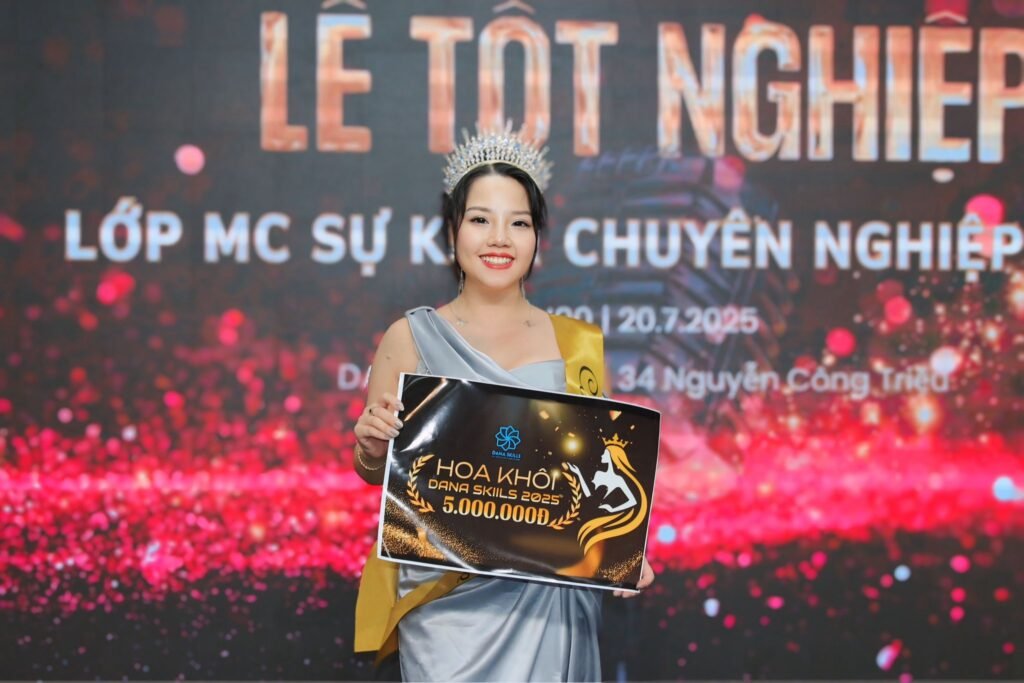
The result? I wasn’t the champion, but I became the runner-up – exactly the goal I had set. The feeling was both proud and relieved.
But more than the trophy, I learned a clear formula for success:
Clear goal + Rubric + Action checklist = Deserved results.
Conclusion.
If you haven’t read The 7 Habits of Highly Effective People, I truly recommend giving it a try. Especially Habit 2 – Begin with the End in Mind. It sounds simple, but when applied, it prevents you from wandering aimlessly and helps you know exactly what to do, what to prioritize, and why you need to put in the effort.
My story with the MC competition is just a small example. You can apply it to work, studies, or any goal. And trust me, once you clearly know your “destination,” the journey, no matter how tiring, becomes so much more worthwhile.
Linkachu – Someone who has battled weight for nearly 20 years and is currently exploring the “eat fully, still lose weight” method.
This is my Facebook! LinkachuMC
Learn more about me at Linkachu.net



 English
  Vietnamese
