In families with children, I often notice that the relationship between adults and children sometimes feels like a quiet struggle.
Adults try to teach, correct, and control, while children resist, cry, or quietly withdraw into themselves.
Many times, when I see these moments, I wonder: does it really have to be this tense?
When I read Totto-chan: The Little Girl at the Window, I realized that many things adults often consider “problems” in children are actually just curiosity, sensitivity, and the ways they explore the world.
The story of little Totto-chan, who was once expelled from school for being too mischievous, shows something very simple:
If adults change their perspective just a little, many difficulties in raising children can become much gentler.
Below are seven misconceptions about children that cause us to misunderstand them and treat them in the wrong way.
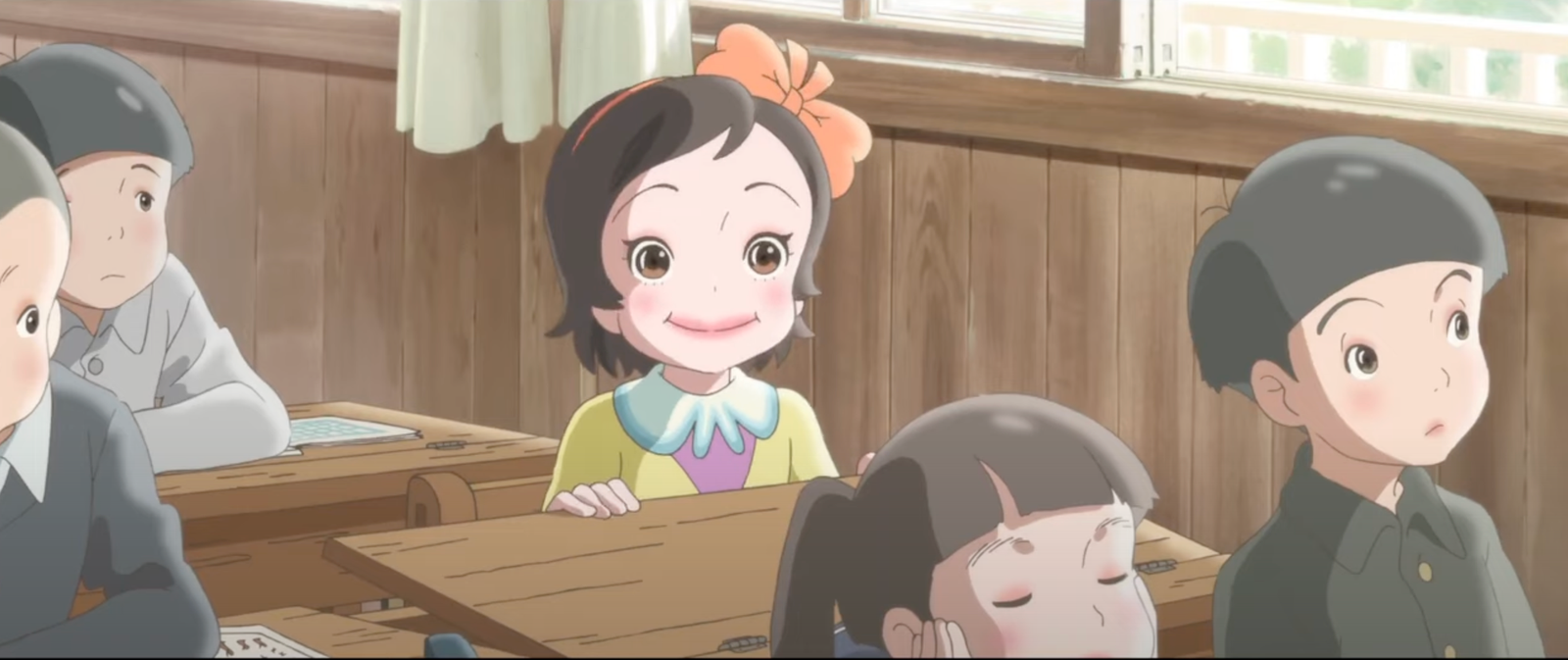
First misconception: Seeing children as beings who “know nothing”
A very common mistake adults make is assuming that children are too young to understand the world. Because of this, we often interrupt them, ignore their stories, or treat their thoughts as merely childish.
But in Totto-chan: The Little Girl at the Window, Headmaster Kobayashi behaved in a completely different way. During his first meeting with Totto-chan, he spent hours simply listening to her stories—from the desk with a lift-up lid at her old school to the things she saw on her way to school.
He did not interrupt. He did not judge. He simply listened patiently.
That simple act of respect made Totto-chan feel that she was being seen as a real person. And when a child feels respected, their behavior gradually begins to change. Totto-chan was no longer “the mischievous girl who got expelled.” In her new school, she began to learn, explore, and grow in a very natural way.
When children are trusted and treated with respect, they often become more confident. From there, they gradually develop the ability to think independently and a sense of ownership over their own lives.
Second misconception: Children do not understand what adults say
Many adults sometimes give casual or careless answers when children ask difficult questions. Sometimes these are familiar jokes like, “We picked you up from a banana bush,” or “When Mom has another baby, she won’t love you anymore.” Adults often think children are too young to understand, that they will believe anything for the moment and forget about it later.
But for children, words that seem light or harmless can sometimes leave emotional marks and affect them more deeply than we expect.
In reality, children are very sensitive to sincerity. They may not fully understand everything in the adult world, but they can clearly sense when adults are avoiding a question, answering just to move on, or not truly taking their curiosity seriously. When this happens repeatedly, children may gradually stop asking questions. Not because their curiosity disappears, but because they begin to feel that their questions are not truly important.
In child psychology, the feeling of being listened to and receiving a serious response carries great meaning. It helps children believe that their thoughts matter, and that asking questions is natural and worthy of respect.
When children ask questions, what they need is not a perfect answer. They simply need an adult who is willing to pause for a moment, think, and then explain patiently in a simple and sincere way.
Because sometimes, a truth spoken gently can make a child feel far safer than a lie that seems harmless.
Third misconception: Children need to be controlled to avoid trouble
Many parents live with constant worry: afraid their children might fall, get their clothes dirty, or break something. Because of this, children are often reminded again and again: don’t run, don’t climb, don’t touch that.
But when everything is constantly restricted, children gradually lose the chance to explore the world through their own experiences.
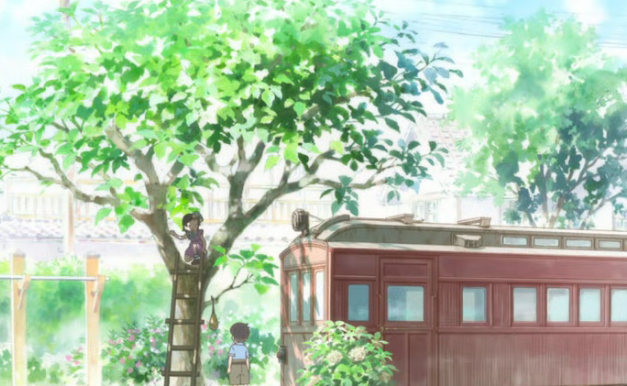
In Totto-chan: The Little Girl at the Window, the school Tomoe chose a different approach. Children were allowed to climb trees, run around, play freely, and explore nature. Adults did not rush to forbid things, but quietly observed and guided only when it was truly necessary.
Those experiences helped children learn to sense their own limits, understand the world, and gradually become more confident.
Children do not need a childhood that is overly safe. They need a childhood that is free enough for them to try, to make mistakes, and to grow through their own experiences.
Fourth misconception: Prohibiting instead of guiding
When children do something adults dislike, the common reaction is often simply:
“Don’t.”
“Stop doing that.”
These prohibitions may make children stop for a moment, but they do not help them understand why the action is wrong. When they do not understand the reason, children may only learn to feel afraid or do it secretly when adults are not watching.
In Totto-chan: The Little Girl at the Window, the approach to education at Tomoe School was very different. Teachers rarely just said “no.” They patiently explained things so children could observe and sometimes experience situations themselves to understand what was right.
Because children learn fastest not from commands, but from the moments when they discover the meaning of their own actions.
Fifth misconception: Giving orders instead of setting an example
Adults often try to teach children through words: read more books, behave politely, be patient with others.
But children do not mainly learn from instructions. They learn by observing.
Children watch how adults speak, how they treat other people, how patient or impatient they are in small everyday situations. And very naturally, children begin to imitate those behaviors.
Children do not need too many reminders.
They simply need adults who live according to the values they want to teach.
Sixth misconception: Only praising children when they do right and criticizing when they do wrong
In many families, praise often appears only when children do things correctly. When they get high scores, complete their work well, or behave as expected, adults are happy to praise them.
But when children make mistakes, perform poorly, or receive low scores, the usual response is blame or disappointment.
What is important to note is that in many situations, adults focus only on the result without truly trying to understand the reasons behind it. A low test score may not mean a child is lazy. Sometimes it is because the child has not fully understood the lesson, because their way of studying is not suitable, because they are struggling with a certain part of the material, or simply because they are tired and under pressure.
When results become the only measure, children can easily begin to feel that they are valued only when they do things correctly. This can make them gradually afraid of making mistakes, afraid of being judged, and hesitant to try new things.
In reality, learning is a process filled with trial and error. A child needs guidance to understand where they went wrong, why it happened, and how they can improve, rather than simply being judged because the result was not good enough.
When adults take the time to understand the reasons behind a child’s struggles, the message the child receives becomes very different: mistakes are not something that define their worth, but opportunities to learn something new.
What children need most is not only praise when they succeed, but support when they do not do well. And it is in those moments that they truly learn how to stand up again, correct their mistakes, and grow.
Seventh misconception: Punishing without understanding the child’s perspective
A child’s action is sometimes judged very quickly by adults: mischievous, disruptive, disobedient.
But if we look from the child’s perspective, many of these actions are simply natural curiosity while exploring the world.
In Totto-chan: The Little Girl at the Window, Totto-chan was once considered a “problematic” student. She was expelled from school simply because she was too active and asked too many questions.
Yet when she entered Tomoe School, where adults were willing to listen to and trust children, Totto-chan became an energetic, creative, and lovable girl.
This shows that sometimes the problem is not the child, but the way adults see them.
Conclusion: What children need most is understanding
Children do not need overly complicated educational methods.
What they often need most are very simple things:
to be listened to,
to be respected,
and to be trusted.
When adults are willing to see children with patience and understanding, many challenges in raising them become much lighter.
When adults change their perspective, they may realize that many behaviors that seem “annoying” are actually the first attempts of a small human being trying to explore the world.
And sometimes, it is children who help adults relearn the most important things in life: curiosity, joy, and sincerity.
conclusion
If Totto-chan had never encountered a school like Tomoe—where curiosity was accepted and differences were respected—she might have grown up believing that she was a “problematic” child.
But with a supportive environment and an adult patient enough to listen, everything changed. The girl who had once been seen as mischievous became a child full of energy and creativity.
The story in Totto-chan: The Little Girl at the Window reminds us that sometimes what needs to change is not the children, but the way adults see them.
When we understand these common misconceptions, we can begin to look at “difficult” or “unruly” children with a different perspective—one that is more patient and more compassionate. And sometimes, just a little understanding can help a child grow in a completely different direction.
—————–
Linkachu – Someone who has battled weight for nearly 20 years and is currently exploring the “eat fully, still lose weight” method.
This is my Facebook! LinkachuMC
Learn more about me at Linkachu.net


 English
  Vietnamese