In many families today, a fairly common paradox is: Living spaces are not lacking, yet they still always feel cramped.
The reason is not only the size of the space but also the habit of accumulating belongings over time. We often keep everything with the familiar thought: “Maybe I’ll need it someday.” And little by little, belongings pile up without us even realising it.
From the perspective of behavioral psychology, this phenomenon can be explained by the “endowment effect.” People tend to place a higher value on the things they already own, making it harder to let go of an item than to buy a new one, which makes decluttering more difficult.
As belongings increase, the brain has to process more visual signals, leading to a mild but ongoing sense of overload that affects concentration and mental well-being. More importantly, the cost of an item is not only the money spent to buy it. It also comes with many hidden costs:
- Space cost: Every item takes up part of the living space, reducing the feeling of openness in the home.
- Attention cost: The presence of objects constantly demands the brain’s awareness, causing distraction.
- Mental cost: Questions like “Should I keep this?” or “Where should I put it?” create silent cognitive overload.
- Time cost: The more belongings there are, the more time is needed for cleaning, searching, and organizing.
Seen this way, an item is not just a possession, but an ongoing “operational cost” over time.
Benefits of decluttering and minimalism
Psychological impact

A tidy space significantly reduces the amount of information the brain has to process each day, creating a clear sense of mental relief. When the living environment becomes less cluttered, people often:
- Reduce stress and feelings of overwhelm
- Improve concentration
- Enhance decision-making quality
In environmental psychology, many studies have shown that cluttered living spaces increase background stress levels and make it harder for the brain to process information efficiently. In other words, the messier the space, the more easily the mind becomes “noisy.”
Impact on daily productivity
When you declutter and minimize belongings, daily life naturally becomes more organized and streamlined.
The most noticeable changes include:
- Less time spent searching for things because everything has a clear place
- Fewer duplicate purchases because you no longer forget what you already own
- Improved efficiency in daily routines
- Major financial benefits
When you live in a tidy space, minimize belongings, and clearly understand what you truly need, you become less likely to shop emotionally or stockpile “just in case.” This helps reduce small but recurring expenses, which are often overlooked yet accumulate quickly over time.
In the long run, minimalism not only helps save money but also encourages more intentional spending decisions instead of habit-driven consumption.
International perspectives
In many developed countries, decluttering and minimizing possessions are no longer seen as trends but have become part of how people define quality of life.

In Japan, the philosophy of Danshari is not only about getting rid of unnecessary belongings but also about reevaluating life itself — letting go of things that no longer fit in order to maintain clarity in both physical space and mental well-being.
Meanwhile, Nordic countries view minimalism as part of their lifestyle culture. People there prioritize quality over quantity, and living spaces are considered factors that directly influence focus, mental health, and long-term life balance.
The common point between these approaches is not about “living with less,” but about living more intentionally and keeping only what truly adds value.
An effective decluttering process (step-by-step guide)
Step 1: Choose one very small area to start with
Do not start by “cleaning the entire room,” because it is very easy to become overwhelmed and give up halfway through. Instead, choose only one small and specific area to declutter, such as one drawer, one corner of a cabinet, one small shelf, or one category of items (clothes, cosmetics, documents, etc.).
The goal is to choose a space small enough to complete within 30–60 minutes.
Step 2: Take everything out of that area
Before deciding what to keep or remove, take everything out of the selected space. Specifically, remove all items from the drawer, shelf, or cabinet and place them together on an empty surface such as a bed, floor, or table. Do not reorganize while taking things out.
When you see everything at once, you will often realize there are more items than you expected, making decisions much clearer.
Step 3: Prepare 3 sorting categories
Before starting, prepare 3 separate areas:
- KEEP
- DONATE / SELL / GIVE AWAY
- THROW AWAY
Every item you pick up must immediately be placed into one of these categories without exception.
There should never be a “maybe later” pile. Although “maybe later” sounds harmless, it actually becomes a gray area where items are neither truly removed nor properly organized. It delays decisions and makes clutter very likely to return.
That is why the most important rule is: once you touch an item, the decision must be completed immediately (keep, donate, or discard) with no exceptions.
Step 4: Filter each item using 2 simple questions
Pick up each item and quickly answer:
- Have I used this in the past 6–12 months?
- If I did not have this, would I truly buy it again?
A simple way to interpret the answers:
- Used it → consider keeping it
- Did not use it → consider discarding or giving it away
Do not overanalyze. The longer you think, the more likely you are to keep things based on emotion rather than actual need.
Step 5: Make a decision within 30 seconds
Each item should have a maximum of 30 seconds for a decision. Only choose 1 of the following:
- Keep
- Discard
- Donate / sell
If you hesitate for too long, treat it as unnecessary by default. The goal is to eliminate indecision and avoid letting emotions convince you to keep things that no longer fit your life.
Step 6: Only reorganize the items you decide to keep
After finishing the sorting process, only reorganize the “keep” category. Place each item in a fixed location that is easy to find and easy to access. Ideally, you should be able to see everything clearly without stacking items on top of each other or “hiding” belongings away.
Do not organize before filtering everything first. Organizing items that have not been removed only creates extra work and quickly leads the space back into the same cluttered state.
Common mistakes when decluttering and minimizing belongings
Many people declutter, yet their homes quickly become messy again — not because they do not know how to clean, but because they fall into common mistakes in the way they think and maintain habits afterward.
Keeping items out of guilt or because “I might need this someday”
This is the most common mistake. People often keep things not because of current needs, but because of the possibility of future use. As a result, many items with no real value or purpose continue occupying space.
Buying storage boxes to hide clutter instead of reducing belongings
Many people believe that buying more boxes, shelves, or storage tools will make the home tidier. In reality, this only hides the problem instead of solving the root cause: owning too many things.
Storing items too deeply or out of sight
When belongings are hidden too well, it becomes easy to forget they even exist. The less visible they are, the less they are used, and eventually they become items that are kept without serving any real purpose.
Not assigning a fixed place for each item
When objects do not have a clear location, they tend to be placed randomly, creating a messy feeling even if there are not that many things. On the other hand, when every item has a fixed place, keeping the home tidy becomes much easier.
Decluttering once without changing lifestyle habits
Cleaning is only the first step. If emotional shopping and unnecessary accumulation continue afterward, the space will quickly return to its previous state.
In short, the issue is not decluttering incorrectly, but failing to change the way belongings are used and managed after the decluttering process is finished.
Conclusion
Decluttering and minimalism are not about living in an empty space, but about learning to keep only the things that truly support your current life. When belongings are simplified, you begin to notice changes not only in your home. A tidier environment makes daily life feel lighter, saves time, and most importantly, reduces the countless small decisions each day that quietly drain mental energy.
As a result, the mind also feels clearer. You become less distracted by unnecessary things and have more energy to focus on what truly matters in life. In reality, decluttering is not simply organizing belongings. It is a process of filtering what you choose to keep in your life — both physically and through your habits.
And you do not need to change everything immediately. Just start with one small drawer today. Once one small area becomes organized, it naturally creates momentum for other spaces to gradually change as well.
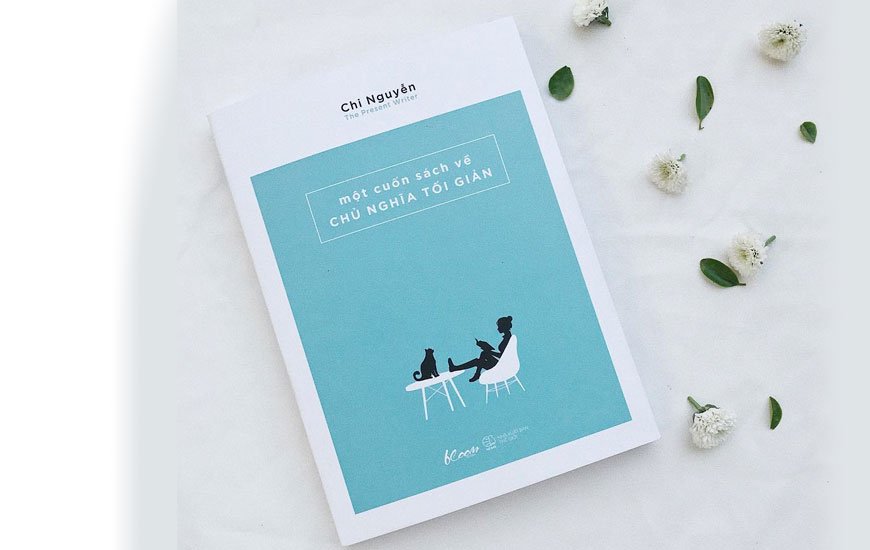
If you want to understand minimalism more deeply from a practical and relatable perspective, you can read books by Chi Nguyen or explore The Present Writer – A Minimalist Blog that Maximizes Your LifeHer work does not force a rigid lifestyle model, but gently guides readers through everyday experiences to help them discover what is “enough” for themselves. It is a soft yet practical approach that can help you begin your own minimalist journey in a personal and sustainable way.
—————
Linkachu — someone who battled weight issues for nearly 20 years and successfully experimented with a method of eating fully and nutritiously while still losing weight, without exercising.
Ready to accompany and support career orientation and development positioning for people aged 18–33..
This is my Facebook! LinkachuMC
Learn more about me at Linkachu.net


 English
  Vietnamese