“Lonely in a crowd” is a feeling that has become increasingly common in this era.
Modern people have never had it easier to connect with each other. With just a phone, we can talk to hundreds of people, keep up with each other’s lives every day, and stay in constant contact with almost no distance at all.
But because of that, many people are starting to feel overwhelmed by relationships.
Many people have hundreds of friends on social media yet still feel lonely. There are days when phones constantly light up with notifications, messages, and invitations to meet, but mentally, they still do not feel at ease. Trying to maintain too many connections at the same time keeps the brain in a constant state of responding, caring, and always being present.
Many people gradually become exhausted from maintaining too many relationships:
- constantly meeting others even when they no longer have the energy
- joining gatherings only out of politeness
- preparing gifts, socializing, and keeping in touch
- trying not to disappoint anyone
At first, each task seems small. But when repeated across too many people and too many connections at once, they begin consuming a huge amount of time, attention, and mental energy.
Not every relationship brings positive value. Some connections only exist because of habit, social pressure, or fear of being left behind.
From a psychological perspective, this makes complete sense. Anthropologist Robin Dunbar suggested that the human brain can only maintain a limited number of truly deep relationships. When there are too many connections at once, mental energy becomes scattered and exhaustion naturally follows.
That is why, as people grow older, many begin to realize that the value of relationships is not about how many people they know, but about who is truly right to walk alongside them in the long run.
Signs of toxic relationships
Not all toxic relationships are loud or clearly harmful. Some don’t involve major conflicts, but still drain your mental energy in a very subtle way.

Signs of negative relationships
- Always overthinking what you say
- Always being the one to initiate contact
- Feeling drained instead of refreshed after meeting
- Feeling pressured to reply to messages immediately
- Unable to be yourself around them
- Feeling mentally heavy even after conversations
A simple sign is this: healthy relationships usually make you feel lighter after connecting, not more exhausted.
However, simplifying relationships does not mean cutting everyone off. Some relationships may not be very close but still have value in work, environment, or long-term opportunities.
The key is to understand:
- who is truly draining your energy without adding value anymore
- who deserves deeper emotional investment
- who should stay at a casual level
Only reaching out when they need something
Some people only appear when they need something: help, emotional support, or personal benefit. But when you need them, they are rarely present. And you may even hesitate to ask them for help because they are often reluctant or full of excuses.
A stable relationship requires mutual care. If one person only receives without giving, the feeling of exhaustion will build up over time.
Not being able to be yourself
This is the kind of relationship where you constantly try to:
- please others
- fit in at all costs
- maintain a certain image
- avoid being judged
You cannot speak naturally, cannot express your real thoughts, or always have to adjust yourself to be accepted. A healthy relationship should not make you feel tense just to stay in it.
Negative friends
Some relationships revolve around complaining, drama, gossip, and spreading negativity.

Psychology shows that emotions spread easily in social groups. When exposed frequently to negativity, the brain tends to stay in a prolonged state of stress.
That is why some relationships do not directly harm you, but still make your mind feel heavier over time.
Superficial connections that consume too much time
Some conversations happen daily but do not create real connection. Many relationships are maintained out of habit, politeness, or the feeling of “I should keep this.”
But the more superficial connections you have, the less time and energy you have for relationships that truly matter.
Why people struggle to let go of relationships that are no longer suitable
Fear of loneliness
Many people maintain relationships not because they feel comfortable, but because they fear being alone.
Humans naturally need connection and belonging. So even when a relationship is draining, people still hold on to avoid emptiness.
This often appears in:
- friend groups with different life values
- purely social relationships
- connections where you can no longer be yourself
The pressure to please everyone
Many people try to maintain all relationships because they fear being seen as cold, selfish, or distant.
So they reply to every message, attend every meeting, and stay in touch with everyone even when they are exhausted.
But in reality, everyone has limited time and energy. No one can maintain all relationships at the same intensity forever.
Nostalgia for the old version of the relationship
Some relationships are kept alive only because of memories:
- “we used to be very close”
- “they were good to me in the past”
- “it’s a pity to let this go”
But people change over time. Each life stage brings different environments, priorities, and perspectives.
Not every relationship that once fit will continue to fit.
Social media creates the feeling that we must always stay connected
In the past, relationships naturally faded over time. Today, social media makes us constantly see each other’s lives through stories, posts, and updates.
This creates a pressure to respond, interact, and stay present, even with people we are no longer close to. As a result, the mind rarely gets real rest.
Relationships worth keeping
People who allow you to be yourself
When you are with them, you don’t have to force yourself to fit in or become someone else. You can:
- speak naturally
- express your real thoughts
- be silent without pressure
A healthy relationship feels light, not carefully controlled.
People who respect your emotions and boundaries

These are people who understand personal space and do not force constant availability. They:
- do not make you feel guilty for saying no
- do not demand immediate replies
- do not control your time or emotions
Being around them creates stability and reduces mental pressure.
People who are present not only when they need something
A balanced relationship involves mutual care. Worth keeping are those who show up not only when they need help, but also when you need support.
People who help you grow into a better version of yourself

Relationships influence not only emotions but also mindset, habits, and life direction. These are people who are:
- có tư duy tốt
- disciplined
- serious in work
- skilled in their field
- mature in thinking
Being around them helps you grow naturally through observation and influence.
A good relationship doesn’t just make you comfortable — it makes you better over time.
People who bring peace instead of stress
Some people make you feel calm without saying much. You don’t need to:
- overthink
- guess their intentions
- maintain a certain image
- maintain an image
Sự bình yên và ổn định tinh thần thường là dấu hiệu rất rõ của một mối quan hệ lành mạnh khi trưởng thành, mà đơn giản là hai người không còn đi cùng một hướng nữa.
How to simplify relationships in a healthy way
Stop trying to please everyone
Not everyone needs to like you, and not all relationships are meant to last forever.
As people grow older, they learn to reserve time and energy for what truly matters.
Learn to say “no” without feeling guilty

For example:
- declining unnecessary meetings
- not replying immediately
- not forcing draining connections
Setting boundaries does not make you a bad person. It makes relationships clearer and healthier.
Reduce connections that overwhelm your mind
You don’t need to:
- follow too many people
- join every conversation
- stay connected out of fear of losing someone
Less noise creates more mental space.
Spend more time with people who truly matter

Instead of maintaining too many connections, invest in:
- family
- close friends
- people who make you feel safe and authentic
These are the relationships that bring long-term stability and emotional ease.
Conclusion
As people grow older, they realize not every relationship needs to be kept at all costs.
Simplifying relationships is not about isolation. It is about stopping the drain from connections that no longer serve you. When you reduce superficial or negative relationships, you create more space for peace, focus, and meaningful connection.
This is an important part of modern minimalist thinking. Minimalism is not only about reducing possessions or spending, but also about simplifying the mind, emotions, and relationships to make life lighter and clearer.
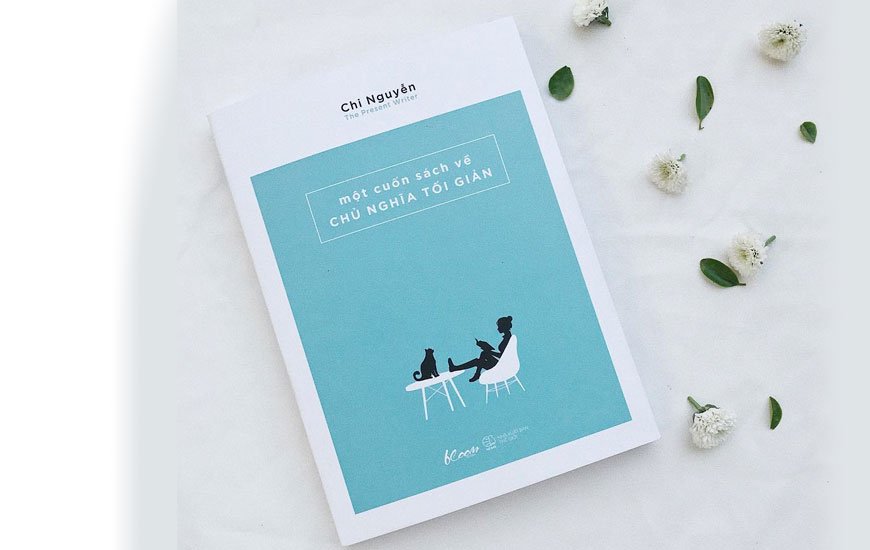
If you want to understand minimalism more deeply from a practical and relatable perspective, you can read books by Chi Nguyen or explore The Present Writer – A Minimalist Blog that Maximizes Your LifeHer work does not force a rigid lifestyle model, but gently guides readers through everyday experiences to help them discover what is “enough” for themselves. It is a soft yet practical approach that can help you begin your own minimalist journey in a personal and sustainable way.
—————
Linkachu — someone who battled weight issues for nearly 20 years and successfully experimented with a method of eating fully and nutritiously while still losing weight, without exercising.
Ready to accompany and support career orientation and development positioning for people aged 18–33..
This is my Facebook! LinkachuMC
Learn more about me at Linkachu.net



 English
  Vietnamese