Adults have many misconceptions about children. One thing I have realized after many years of working with children and parents is this: adults often truly love children, but they do not always truly understand them.
We grew up in a time when emotions were often dismissed.
“What’s there to cry about?”
“You’ll understand when you grow up.”
“In the past, your parents didn’t even have what you have now.”
And gradually, many people carry the way they were raised into how they raise their own children. Not because parents don’t love their children, but because no one ever taught us how to look into the inner world of a child.
Children do not only need to be well-fed, do well in school, and be obedient. They need to be understood. And there are things adults think are normal that are quietly leaving very long-lasting marks on a child’s heart.
“Children don’t know what it means to be sad.”
This is perhaps one of the most misunderstood things by adults. Adults often judge sadness based on the “severity” of the situation. Losing a job is worth being sad about. Financial pressure is worth being sad about. A relationship breakup is worth being sad about.
What about children?
- Not being played with by friends
- Being called out by the teacher
- Parents forgetting a promise
- Or breaking something they love
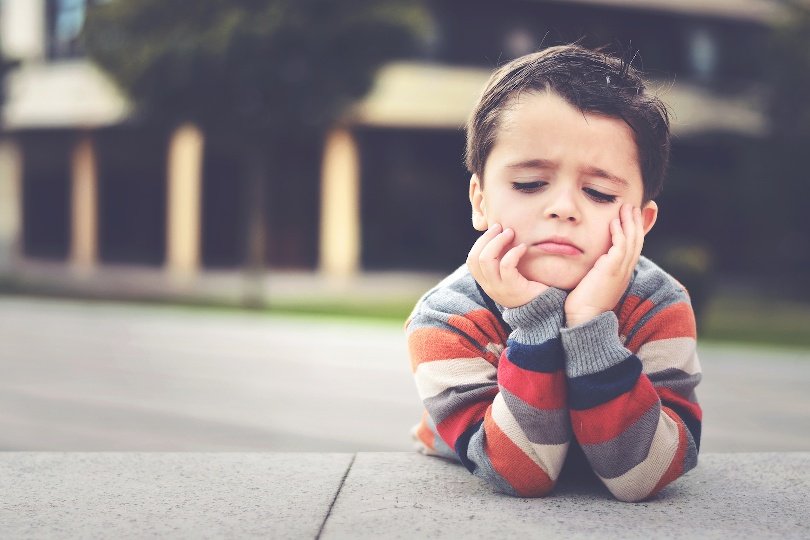
In the eyes of adults, these are just small things. But a child’s psychology doesn’t work that way. A child has not yet had enough life experience to self-soothe like an adult. A child’s brain, especially the emotional regulation areas, is still developing. This makes children’s emotions often feel “bigger” than we think. Some parents have told me:
“My child is too sensitive.”
But in reality, children are born sensitive. It’s just that as we grow older, adults learn to hide their emotions more and more. What a child needs when they are sad is not:
We grew up in a time when emotions were often dismissed. “What’s there to cry about?” Instead, it should be: “Mom knows that made you sad.” “Mẹ biết chuyện đó làm con buồn.”
When emotions are acknowledged, children learn how to understand themselves. Children who grow up in environments where their emotions are constantly dismissed often learn to silence themselves. They no longer know how to share sadness, tend to suppress emotions, or even explode emotionally as adults. Because from a young age, whenever they were hurt, what they heard most was: “There’s nothing to cry about.” Gradually, they start believing their feelings don’t matter and must be hidden in order to be loved.
“Little kids don’t remember anything.”
Many adults think: “They’re still small, they’ll forget tomorrow anyway.”
It’s true that children may forget events, but feelings often stay for a very long time. A child mocked for giving a wrong answer may grow up with a fear of speaking in public. A child frequently compared to others may always feel “not good enough.” And a child who is constantly shouted at may become unusually quiet or extremely reactive when older.
What’s important is that many childhood wounds do not exist as clear memories, but as feelings: the feeling of not mattering, the feeling of always being wrong, the feeling of having to try very hard just to be loved. Some adults spend years healing because even though they don’t clearly remember the events, they still carry a deep sense of being overlooked since childhood.
Childhood wounds may fade from memory, but the emotional imprint often stays for a very long time. As adults, they may struggle with low self-confidence, fear of mistakes, people-pleasing tendencies, or a constant sense of inadequacy. Some carry the fear of being criticized or rejected for years, simply because when they were young, their emotions were dismissed as “you’ll forget it anyway.”
“A quiet child is a well-behaved child.”
Many parents prefer children who don’t argue, don’t make noise, don’t whine, and always obey. And yes, they are often praised as “good kids.” But in child psychology, not all silence comes from peace.
Some children stay silent because they have learned that their emotions are not listened to, especially after repeatedly being told: “Stop crying,” “Don’t be like that,” “You’re overreacting,” “It’s not that serious.”
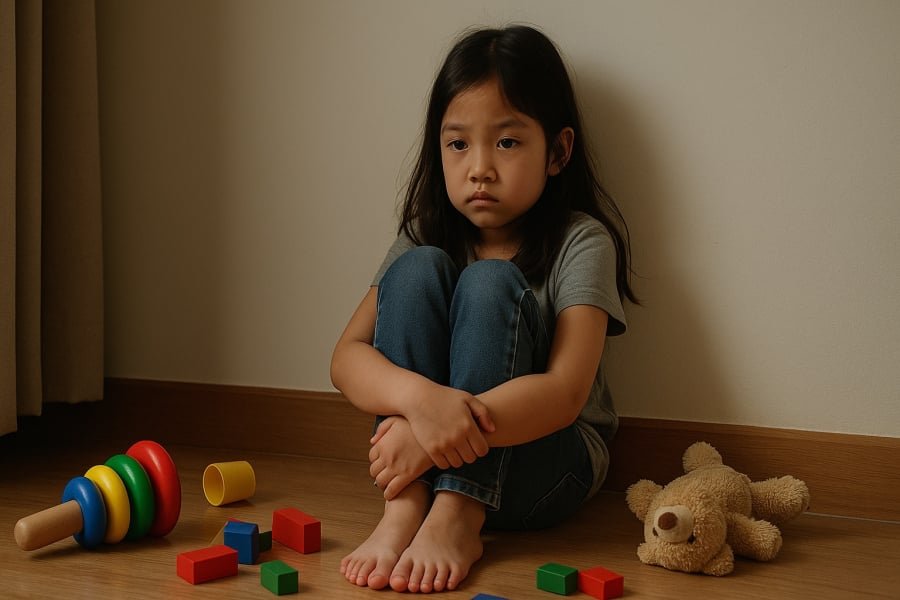
Children gradually learn that expressing emotions is not safe and begin to withdraw. These children, as they grow up, often hide their feelings and needs, are afraid of bothering others, struggle to say “no,” and constantly try to endure things in order to be loved. On the outside, they may appear mature and understanding, but inside they are often lonely and unsure how to speak up for themselves.
“Hyperactive children are just naughty.”
Some children cannot sit still for long. They love to run, constantly ask questions, and are curious about everything around them. In environments with many rules, these children are easily labeled as mischievous, disruptive, inattentive, or difficult to teach.
But what adults often forget is that curiosity is a natural part of a child’s development, and a child who loves to explore is not a “bad” child.
I once met a boy who constantly took his toys apart just to see what was inside. The adults around him were exhausted and often scolded him for “breaking things.” Yet a few years later, that same boy developed strong skills in assembly and technical thinking. Many of a child’s abilities first appear in ways that adults find inconvenient. What children need is not only control, but guidance on how to channel their energy properly, without being labeled.
When a child is repeatedly called “bad,” “destructive,” or “difficult,” they begin to believe there is something wrong with them. This leads to low self-confidence, fear of expressing themselves, and constant worry about making mistakes. Some children withdraw, while others become more resistant because they feel misunderstood. Most sadly, many lose their natural curiosity and energy—qualities that could have become their greatest strengths.
“Comparison will help children try harder.”
“Look at that child.”
“Why can others do it but you can’t?”
“When I was your age…”
Many adults use comparison as motivation.
But for children, comparison often creates shame rather than effort. When constantly placed next to someone else, a child begins to think: “Maybe I’m not good enough.”
And the most dangerous part is this: children stop trying because they enjoy learning or growing. They try only to gain approval. Many adults today struggle with fear of failure, achievement pressure, and chronic feelings of inadequacy—not because they are weak, but because from childhood, they were used to being measured against others.
Children who grow up with constant comparison often struggle to feel “good enough.” They tend to develop low self-esteem and evaluate their worth through achievements and external validation. As adults, many become afraid of failure, pressured to prove themselves, or endlessly compare themselves to others without ever feeling satisfied. And sometimes, comparison even leads to resentment toward the “other child” they were constantly measured against—even though that person did nothing wrong.
“Raising a child means fixing a child.”
Many adults unconsciously turn parenting into a constant process of correction: don’t run, don’t do that, don’t say this, don’t behave like that. We become so focused on “fixing” children that we forget they also need to be seen for their strengths.
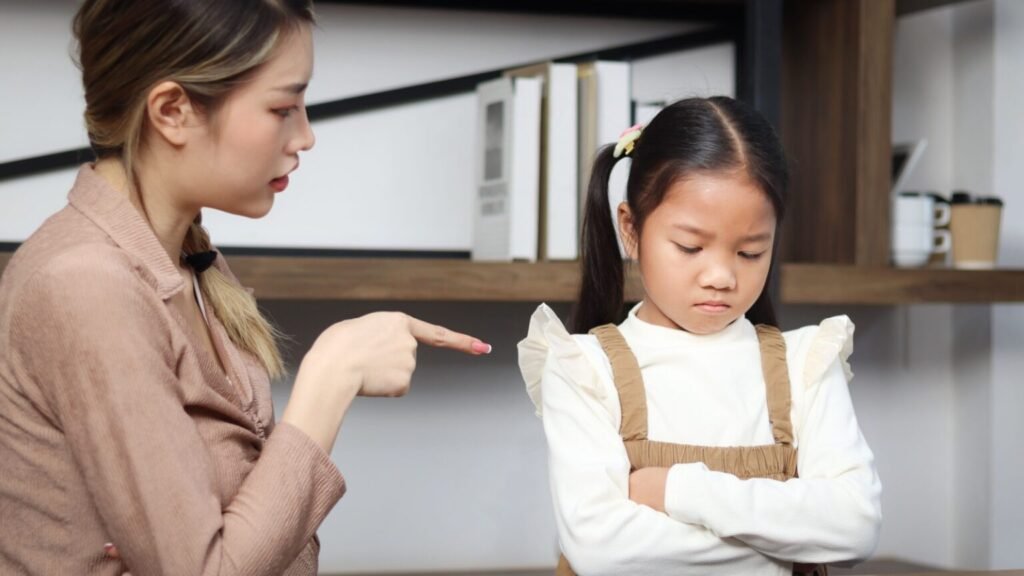
A child who is constantly hearing about their mistakes will grow up with the feeling: “I am never good enough.” Yet what helps a child develop in a healthy way the most is the feeling: “Even though I am not perfect, I am still loved.”
Education is not only about correcting behavior. Education is also about ensuring that a child does not lose their confidence and sense of self-worth while growing up. When parenting is misunderstood as “fixing a child,” the child gradually grows up believing that they are always wrong. Instead of being seen as a developing human being, they become “a collection of errors that need to be corrected.” This makes children lose confidence, fear making decisions, and constantly wait for others to judge whether they are right or wrong.
Over time, these children often become adults who are very harsh with themselves. They tend to be perfectionists, constantly afraid of making mistakes, or on the contrary, they give up easily because they believe “no matter how hard I try, it’s never enough.” Some will continuously seek external validation because they have never truly felt that they were “okay” as they are.
Conclusion
There is a sentence I really like:
“Every child is a good child.”
But sometimes, adults are too busy teaching children to become the “right child” that they forget this. Children do not need perfect parents. They need adults who are willing to try to understand them a little more each day.
Because there are words that adults may forget in seconds, but a child can carry them throughout their entire childhood—and grow up with emotional wounds and personality struggles that last into adulthood.
I was inspired to write about this topic after reading Totto-chan: The Little Girl at the Window. It is a beautiful book about children and education, written through the gentle flow of storytelling. The book gave me a deep sense of peace, and if you want to understand children better, it is truly worth reading.
—————–
Linkachu – Someone who has battled weight for nearly 20 years and is currently exploring the “eat fully, still lose weight” method.
This is my Facebook! LinkachuMC
 English
  Vietnamese