Many children are labeled as “troublesome,” “smart,” or “well-behaved,” but in reality, they don’t become that way first and then get labeled. In many cases, it is the label that shapes who they become. Let’s look deeper from a psychological and scientific perspective to understand how labeling can be used more consciously with children.
There is a famous experiment by Robert Rosenthal and Lenore Jacobson (1968). They told teachers that certain students were “late bloomers with high potential,” even though those students were randomly selected. After some time, those students showed significantly greater academic improvement than their peers.
This did not happen because the children were inherently “better” from the start, but because of something more subtle: teachers began to see them differently, became more patient, more trusting, called on them more often, and unconsciously created more learning opportunities for them. The same child, but the belief of adults changed the way that child developed.
Based on this experiment, children around us can also grow in a more positive direction when they are seen as capable, when they are believed in, and when they are given more responsibility and opportunities.
Labeling is a natural part of everyday life
In reality, no one intentionally tries to hurt a child. But labeling happens very naturally:
“This kid is naughty” when a child spills water
“He’s lazy” when a child hasn’t finished homework
“She’s shy” when a child is afraid to speak up
“He’s naturally smart” when a child gets something right once
The problem is not a single sentence, but when that sentence becomes a fixed way of seeing the child.
A very simple example:
- A child breaks a glass of water. If the child is seen as “clumsy,” adults are more likely to get frustrated and scold.
- If the child is seen as “someone who is still learning to be careful,” adults are more likely to guide them on how to try again.
The same behavior, but a different way of seeing it leads to completely different responses.
Children gradually believe how adults see them
A child does not grow up based on what they are told once, but on the repeated “conclusions” about who they are.
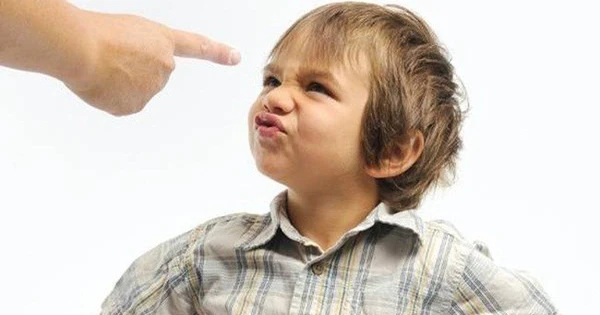
For example: a boy is often told “you’re always so naughty”
→ over time, he stops trying to sit still because he starts to believe “that’s just who I am”
A girl is often told “you’re so shy”
→ she gradually raises her hand less in class because she becomes afraid of being wrong
A child who is called “bad” every time they make a mistake
→ begins to think: “Whatever I do, I will be seen as bad”

Children don’t react to a single sentence—they react to a repeated image of themselves. In many classroom situations, when a teacher gives attention and praise to a specific student, that recognition alone can create a very noticeable change in the child’s behavior.
For example, a student who was initially average starts to improve significantly after being told, “You have strong potential in this subject.” The child becomes more confident, starts asking questions, studies more actively at home, and gradually becomes genuinely better in that subject. What matters here is not only existing ability, but the child’s belief that “I am capable.” When a child is seen clearly and consistently through their potential, they tend to act in ways that match that belief.
Labeling creates a behavioral loop in children
The danger is that children begin to behave according to the labels attached to them.
Very real examples:
A child who is seen as “bad”
→ when scolded, the child reacts more strongly
→ adults say: “See, I told you they’re really bad”
→ the loop keeps reinforcing itself
A child who is seen as “smart”
→ is given more difficult tasks in class
→ gets more opportunities to practice
→ and genuinely improves over time

It is not the child who changes first, but the environment that “pushes the child into that role.”
This is the self-fulfilling prophecy: what adults believe → how the child is treated → and eventually, what the child becomes.
When labeling is repeated enough times, it is no longer just a description of behavior—it becomes the child’s identity.
For example:
A child makes a mistake → “because they are bad”
A child talks back → “that’s just their personality”
A child doesn’t do homework → “they are naturally lazy”
At this point, adults are no longer observing behavior to guide correction. Instead, they are judging the child as a whole person. And when a child is seen as a “fixed version” of themselves, change becomes very difficult—because no one believes they are capable of changing.
Adults’ perception shapes a child’s development
Labeling is not completely negative. The issue lies in how it is used. A very practical way to shift it looks like this:
❌ “You’re so naughty”
✔ “This behavior isn’t okay. Let’s fix it together. I know you’re a good kid.”
❌ “You’re lazy”
✔ “You’re just not focused right now. I know you’re naturally very good at math, just like me.”
The Pygmalion effect doesn’t only exist in experiments. It happens every day in families, classrooms, and society.
A child who is believed to be smart is often: given more responsibilities, encouraged to take on challenges, listened to more often, and as a result, given more real opportunities to grow.
On the other hand, a child who is seen as “weak” is often: given fewer difficult tasks, expected less, given fewer chances to express themselves, and gradually becomes what adults had “predicted.”
Conclusion
Labeling is not just about naming a child. It is how adults unconsciously “design” the way a child sees themselves.
And the most important thing to reflect on is this: children do not become who they are “predetermined” to be, but who they are consistently “believed” to be by the adults around them.
—————–
Linkachu – Someone who has battled weight for nearly 20 years and is currently exploring the “eat fully, still lose weight” method.
This is my Facebook! LinkachuMC


 English
  Vietnamese